My wrists were naked from 2005 to 2019. It was 2005 that I got my first cell phone, a flip phone with a secondary display which displayed the time on… Read More
3 IMPORTANT CONSIDERATIONS WHEN DESIGNING WEARABLE PRODUCTS


My wrists were naked from 2005 to 2019. It was 2005 that I got my first cell phone, a flip phone with a secondary display which displayed the time on… Read More
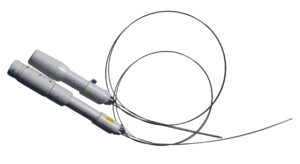
Having been associated with medical device development directly and tangentially for many years, I have witnessed and used a few things that make a difference. I would like to share… Read More
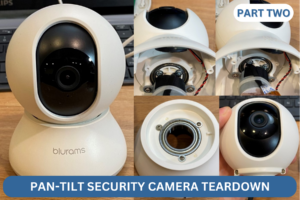
Welcome back to the product tear-down of a Pan-tilt camera! This is part two, where we’ll open up the ball head and see what’s inside. In part one of the… Read More
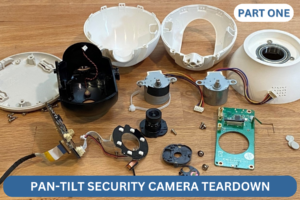
I purchased a home security camera with the intent of taking it apart and learning how it works. The camera was inexpensive and mechanically complex, featuring a two-axis gimbal, a… Read More
What is FMEA? FMEA (Failure Mode and Effect Analysis) is a structured approach used to identify potential failure modes in a system, process, or product, and to evaluate the potential… Read More
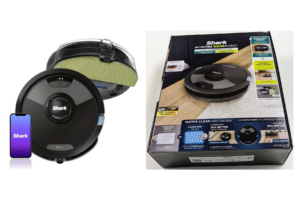
The Shark AI Ultra 2-in-1 robot vacuum is a smart and innovative cleaning appliance designed to make your cleaning experience easy, effective and hassle-free. It comes with advanced features like… Read More

If you are developing a medical device, knowing which testing standard will be used to evaluate the safety and effectiveness of your device is critical for obtaining FDA clearance or… Read More
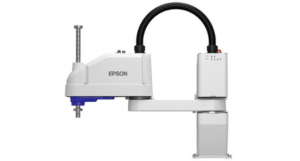
With time-to-market pressures often compressing design engineering cycles, being able to employ creative prototyping techniques to get through vital design hurdles is critical. Using a combination of CAD-based component selection,… Read More
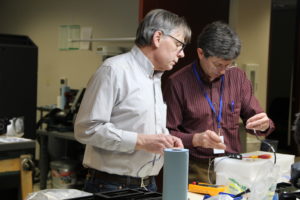
Design for test (DfT) is a mindset, not a specific process or technology. The guiding principle of DfT is to consider and enable testability at all points in the design… Read More
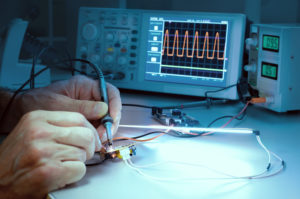
Developing successful test systems and procedures is a critical component of product design. Good test system design leads to designs that meet requirements, reliable schedules, and smooth production ramps. Including… Read More
 Software: Design Complete
 Hardware: Pre-production units for design verification
 MFG. Readiness: CM schedule and budget, Unit build tracking
 Software: Full feature implementationHardware: Prototype 2 units with production-representative materials and processes
Quality: Build Quality PlanSoftware: Core functionality implementationHardware: Prototype 1 units with rapid prototyped components
Quality: Critical manufacturing process identificationSoftware: Architecture design: block, sequence and state diagramsHardware: Major Component definition & Proof of Concept subsystems build
Quality: Design for Manufacturing tradeoffs evaluation
Software: Full feature implementationHardware: Prototype 2 units with production-representative materials and processes
Quality: Build Quality PlanSoftware: Core functionality implementationHardware: Prototype 1 units with rapid prototyped components
Quality: Critical manufacturing process identificationSoftware: Architecture design: block, sequence and state diagramsHardware: Major Component definition & Proof of Concept subsystems build
Quality: Design for Manufacturing tradeoffs evaluation