This is part of a series discussing some key high-level challenges of the hardware product development process and how to tackle those problems so that you can mature your design… Read More
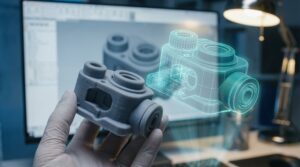
FROM DEMO TO DONE: ENGINEERING HARDWARE THAT ACTUALLY SHIPS

| by Doug Harriman

This is part of a series discussing some key high-level challenges of the hardware product development process and how to tackle those problems so that you can mature your design… Read More
| by Lewis Siempelkamp
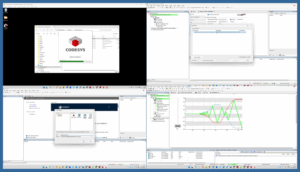
Whether you’re developing advanced automation systems, a robotic system, or simply looking to streamline your industrial processes, there often comes a point when off-the-shelf PLC hardware just isn’t flexible or… Read More
| by Nate Hague

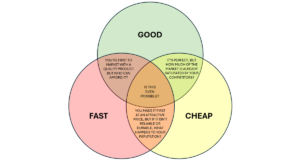
“Fast, Cheap, and Good: Choose any two.” This is an often-repeated joke in the engineering world that draws its source from the difficulties incumbent in balancing your time to market,… Read More
| by Tristan Dudik

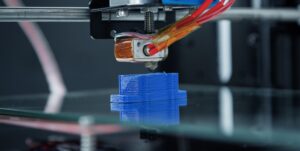
There is a lot of hype about 3D printing. 3D printing technologies have been transformative in many industries, including product development. With 3D printing we can get complex geometry in… Read More
| by Kim Morch

Embarking on the journey from prototype to mass production is a pivotal stage for any product. Many entrepreneurs may wonder why New Product Introduction (NPI) services are crucial to this… Read More
| by Meindert Norg

With time-to-market pressures often compressing design engineering cycles, being able to employ creative prototyping techniques to get through vital design hurdles is critical. Using a combination of CAD-based component selection,… Read More
| by Doug Harriman

Often, when engineering a design, you may be faced with having to decide between using commercial off-the-shelf (COTS) parts versus designing new, custom parts for the design. Do you “make”… Read More
| by Lori Rhodig
After a second full year of the pandemic, supply chains for numerous goods, components, and materials continue to be in crisis. The importing companies of the Port of Los Angeles,… Read More
| by Neil Foxman

Transforming your mechanical CAD designs into real and tangible parts is one of the most rewarding feelings as an engineer. However, a lot of things can go wrong during this… Read More
| by Amy Cheben

Configurations are a powerful tool in SOLIDWORKS which allow users to maintain multiple versions of a part or an assembly in a single file. Like many features in SOLIDWORKS, Configurations… Read More
The Simplexity team can be as involved in the production phase as requested by our clients. For clients with internal manufacturing or established relationships with contract manufacturers, our engineers are available to ensure quality is maintained and provide ongoing engineering support as needed.
Simplexity has a dedicated New Product Introduction (NPI) team that can guide the transition from design into production. The NPI team presents multiple options for manufacturing to the client, allowing clients to choose the solution that best suits their needs. This can involve Simplexity performing initial builds in-house prior to full handoff to a contract manufacturer or building the product via established relationships with contract manufacturing partners either domestically or overseas early in the process.
This phase occurs once the detailed design is complete, and prototypes are built with manufacturing-representative quality and detail. More extensive, formal testing is performed, such as life, reliability, safety, environmental, drop, and vibration.
The design team works closely with the manufacturing team to enable a smooth transfer, often with Simplexity engineers traveling to the contract manufacturer sites to ensure product quality. The design is transferred to the client based upon specific needs, most often after all tests are complete and the design is verified.
Phase 2C iterates on the learnings of Phase 2B and involves a refined prototype build of a fully integrated system. Some projects also benefit from additional iterations of the product based on prior learnings through additional phases (2D, 2E, etc), which are not represented in this graphic. All requirements are intended to be tested, and at the end of Phase 2 there will be confidence that the units will pass verification in Phase 3. The Bill of Materials is further refined, and the team updates estimates for the per unit cost of the product by receiving pricing from vendors and suppliers.
The detailed design phase usually has multiple, iterative sub-phases as the design progresses and representative prototypes are built. Phases 2B and 2C are typically the largest efforts in the product development process, where the specific implementation for all disciplines occurs (mechanical, industrial design, electrical, firmware, systems, software, manufacturing, and quality).
Simplexity typically engages with production component suppliers and contract manufacturing groups early in this phase to provide additional manufacturing input on the design. If the product has stringent testing or certification requirements, pre-screens are performed in this phase prior to formal regulatory agency testing.
Phase 0 is an optional phase for projects where the technical feasibility of the idea has not yet been fully proven. It can consist of research, concept work, exploring initial architecture, performing feasibility studies, and basic prototyping and testing.
The business and user requirements are converted into engineering requirements for the product. The project planning activity is based on the schedule, budget, risk, and initial product requirements. This process is best done as a collaborative team effort with the client, who has the deepest understanding of the market needs and user requirements.
The detailed design phase starts with defining options for the product architecture, with the goal of having the greatest chance of successfully meeting product requirements while best mitigating risk. Engineering activities in this phase include presenting options for hardware components, outlining the system block, sequence, and state diagrams, creating rough CAD, and breadboarding of high-risk subsystems. Results are presented with a description of the pros, cons, and key tradeoffs for each scenario.