Precision temperature control in product design is a matter of degrees. Sometimes the Goldilocks zone is as broad as a barn door. When it is, life is easy. Sometimes though,… Read More
DESIGNING THERMAL CONTROL SYSTEMS


| by Gerold Firl

Precision temperature control in product design is a matter of degrees. Sometimes the Goldilocks zone is as broad as a barn door. When it is, life is easy. Sometimes though,… Read More
| by Dorota Shortell

Simplexity’s brand promise is to deliver simple solutions to complex engineering challenges. As many in the field know, it’s actually harder to develop elegant solutions with fewer parts and components. Adding… Read More
| by Neil Foxman and Tristan Dudik

Last semester, Simplexity presented a challenge to students at the University of California, San Diego and Portland State University: test buttons. This was a capstone design project for the students, which is an opportunity… Read More
| by Katie Elliott

Medical and biotech device development is a special class of product development because of the regulatory environment. Those new to the field are often surprised about what devices are considered medical devices… Read More
| by Doug Harriman

While developing a product, you must take risks to achieve market success. To achieve business success with that product, it’s critical to assess and address risk as early and affordably… Read More
| by Doug Harriman

During product development, you must take risks to achieve market success. To also achieve business success, it’s critical for a design firm to assess and address risks as early and… Read More
| by Raj Oswal

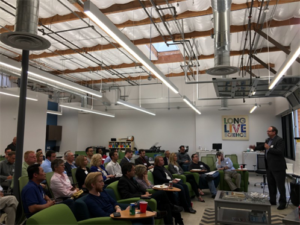
The San Diego Biotech Consortium is a regional partnership of service companies dedicated to promoting best practices in product development for the Biotech industry. The Consortium offers leaders of biotech… Read More
| by Josh Siegel

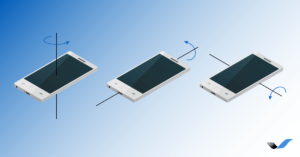
At Simplexity, part of our work is designing embedded motion systems. As embedded motion engineers, we have to know how the smart electronics get placed within the physical structure (“embedded”)… Read More
| by Gabriel Aldaz

In the early 1900s, the University of Oregon lost its Department of Engineering and Mines to Oregon Agricultural College, today known as Oregon State University, in Corvallis. Ten years ago,… Read More
| by Josh Siegel

At Simplexity, part of our work is designing embedded motion systems. As embedded motion engineers, we have to know how the smart electronics get placed within the physical structure (“embedded”)… Read More

The Simplexity team can be as involved in the production phase as requested by our clients. For clients with internal manufacturing or established relationships with contract manufacturers, our engineers are available to ensure quality is maintained and provide ongoing engineering support as needed.
Simplexity has a dedicated New Product Introduction (NPI) team that can guide the transition from design into production. The NPI team presents multiple options for manufacturing to the client, allowing clients to choose the solution that best suits their needs. This can involve Simplexity performing initial builds in-house prior to full handoff to a contract manufacturer or building the product via established relationships with contract manufacturing partners either domestically or overseas early in the process.
This phase occurs once the detailed design is complete, and prototypes are built with manufacturing-representative quality and detail. More extensive, formal testing is performed, such as life, reliability, safety, environmental, drop, and vibration.
The design team works closely with the manufacturing team to enable a smooth transfer, often with Simplexity engineers traveling to the contract manufacturer sites to ensure product quality. The design is transferred to the client based upon specific needs, most often after all tests are complete and the design is verified.
Phase 2C iterates on the learnings of Phase 2B and involves a refined prototype build of a fully integrated system. Some projects also benefit from additional iterations of the product based on prior learnings through additional phases (2D, 2E, etc), which are not represented in this graphic. All requirements are intended to be tested, and at the end of Phase 2 there will be confidence that the units will pass verification in Phase 3. The Bill of Materials is further refined, and the team updates estimates for the per unit cost of the product by receiving pricing from vendors and suppliers.
The detailed design phase usually has multiple, iterative sub-phases as the design progresses and representative prototypes are built. Phases 2B and 2C are typically the largest efforts in the product development process, where the specific implementation for all disciplines occurs (mechanical, industrial design, electrical, firmware, systems, software, manufacturing, and quality).
Simplexity typically engages with production component suppliers and contract manufacturing groups early in this phase to provide additional manufacturing input on the design. If the product has stringent testing or certification requirements, pre-screens are performed in this phase prior to formal regulatory agency testing.
Phase 0 is an optional phase for projects where the technical feasibility of the idea has not yet been fully proven. It can consist of research, concept work, exploring initial architecture, performing feasibility studies, and basic prototyping and testing.
The business and user requirements are converted into engineering requirements for the product. The project planning activity is based on the schedule, budget, risk, and initial product requirements. This process is best done as a collaborative team effort with the client, who has the deepest understanding of the market needs and user requirements.
The detailed design phase starts with defining options for the product architecture, with the goal of having the greatest chance of successfully meeting product requirements while best mitigating risk. Engineering activities in this phase include presenting options for hardware components, outlining the system block, sequence, and state diagrams, creating rough CAD, and breadboarding of high-risk subsystems. Results are presented with a description of the pros, cons, and key tradeoffs for each scenario.